Finishing, or the utility of a shielding or refining coating to wood-work, is the very last step of making a fine appearance of wood furniture. It can convey out the grain and elicit a lovely luster, at the same time as additionally imparting safety to moisture, oils and different factors and making it less difficult to clean.
But which coating is great for you? Each end has its very pros and cons, typically balancing beauty with sturdiness and simplicity of maintenance. Will it’s uncovered to liquids, as with a desk top? These concerns are step one to selecting new hardwood product with the great finish to your family’s needs.
The Many Types of Wood Finishes
Wood furniture finishes comes with variety of tools, substances and techniques. The list below are some of the finishes that usually applied to your furniture in order to improve overall appearance and restoration.
- Varnish
- Lacquer
- Wax
- Shellac
- Oil
- Polyurethane
Varnish
Naturally heat, water and ultraviolet (UV) resistant (spar varnish specifically), this resin, oil and solvent mixture is each versatile and sturdy thanks to its high solids content. Builder Dan Maxham of W.A. Mitchell Fine article of furniture in Farmington, Pine Tree State is very conscious of the natural movement of wood. “We tend to use in building fine furniture is the wood which consistently either contracting or expanding in response to temperature and humidity.” He uses a variant known as conversion varnish on his article of furniture for its snap and forgiveness to varied humidness while not cracking. Conversion varnish provides a wonderful protecting end. Its drawbacks are that it is arduous to reverse once applied, and tougher to surface. In terms of look, varnish ready to convey a hand rubbed look with it low- or semi-gloss end.
Lacquer
Lacquer, in particular pre-catalyzed lacquer, is taken into consideration through many expert woodworkers to be the best furniture finish, which have a good balance between beauty, easy-to-apply and protective qualities. Pre-catalyzed lacquer makes use of a catalyst to initiate a chemical response that dries even tougher than the long lasting evaporative drying technique of conventional lacquer (though even lacquer isn’t always invincible and could still scratch from immoderate wear and tear). In addition to abrasion and water-resistant properties, lacquer is a thinner finish so it’s usually sprayed in much more thin layer. This creates an extremely smooth, natural look and clean , which allow the wooden itself to be the attraction of the shadow.
Polyurethane
A cousin of varnish, polyurethane additionally gives a really protective pinnacle coat. Its traits range relying on the base material. In addition to durability, oil-based poly is pretty good heat resistant, water and chemical substances and is derived in plenty of gloss alternatives which include satin, semi or excessive gloss. Oil-based also include an amber tone which particular obvious when expose to sunlight, and brings out the richness of the wood. Water-based poly is a more recent option. While a water-based finish can have a decrease in volatile organic compound(VOC) content (making it greater environmentally friendly) and won’t give a color to your furniture, Moreover, it also won’t preserve up as nicely to heat and chemical substances.
Shellac
Shellac is a one centuries old, true finish. it is made from an alcohol solvent mixed with secretions from the lac bug of Southeast Asia, a result of a glossy and hard top coat is achieved when dries from this finish . Some woodworker choose this finish for its sturdiness and safety from abrasions and water damage, in addition to its clear glossy or amber look and nontoxic, food-safe qualities. However, Shellac does have some weakness, together with heat and alcohol-based liquids. The key is to prevent the spill of liquor or even cologne, and it is recommended to avoiding off white heat rings from mugs and plates. For this matter, shellac may not be a suitable finish for a kitchen table.
Oil
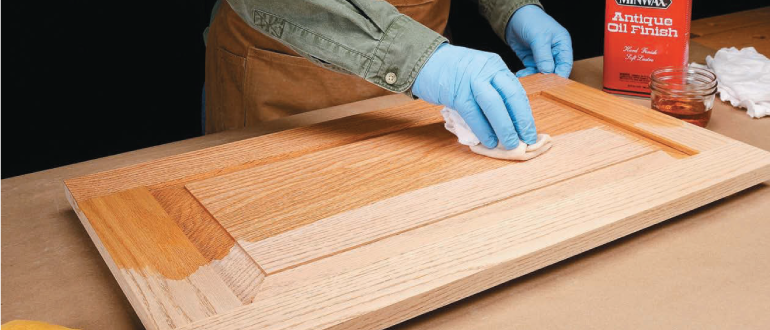
Oil is the finish of choice for designer and woodworker. It is usually found in two varieties, linseed and tung, these drying oils (the non-VOC-emitting variant) will dry as a thin film once the molecules are exposed to air after the oil penetrate the wood. Since the oil is hand rubbed into the wood, it leaves a natural rich finish that emphasize the dimensions and depth of the wood grains. Most oil finishes able to give some resistance to moisture, especially when topped with a wax finish. Oil is not as protective as other surface finishes, but the look may be worth the trade off for those willing to invest time and energy into proper maintenance.
Wax
If appearance is your target factor for your finish decision, a wax finish is a good place to start. It improve the natural grains and pores of wood with a soft luster. With this being applied, it will not yellow over time. Waxes provide a protective coating on top of it and hence, it does not penetrate or seep into wood. This helps conserve the natural color of the wood without oxidizing, but it does not particularly stepping up the wood. For this reason, wax is often used to combine with oil as a top coat.
Wood furniture must have personality as well as be beautiful
Understanding Wood Furniture Finishes: What you need to know

Furniture Finishing Tips